
Lesson 3.1First Load7 min readUpdated

Getting set up to get paid

The payment side of your first loads: invoicing, quick-pay vs. factoring, and the documents brokers will ask for before they book you.

Brandon Bennett, Lead Instructor at Trucking Authority University

By Brandon Bennett · Lead Instructor

Trucking Authority University · Powered by QP Trucking Solutions · Free Educational Curriculum

Owner-operator inside modern semi-truck cab reviewing freight invoice payment and rate confirmation on laptop
Having a clean PDF carrier packet and clear settlement strategy turns delivered loads into working cash without delays.

Visual Framework

From Booked Load to Cash in Your Bank Account

Follow this exact four-step discipline on every single load so zero invoices sit in dispute.

Step 01

Instant Carrier Packet & Rate Con

Send W-9, MC Grant Letter, and insurance agent info; verify rate confirmation matches broker MC, rate, detention, and accessorials.

Step 02

Clean Pickup & Signed BOL

Inspect seal/piece count, note any shipper delay times in/out on the Bill of Lading, and confirm receiver appointment.

Step 03

Crisp POD Scan Before Pulling Out

Ensure receiver signs, prints name, dates, and notes clean delivery on every BOL page—scan flat PDFs right inside the cab.

Step 04

Submit Invoice or Factoring Batch

Upload Rate Confirmation + signed POD + approved lumper/scale receipts together for same/next-day factoring or direct billing.

What documents do freight brokers ask for before releasing a rate confirmation?

Good loads disappear from load boards in minutes. If you tell a broker 'hang on, let me hunt through my email for my W-9 and call my wife for my MC letter,' that load goes to the next caller on hold.

Prepare a clean folder on your phone and computer containing: (1) completed and signed Form W-9 matching your LLC and EIN, (2) official FMCSA Operating Authority Certificate / Grant Letter, (3) sample Certificate of Insurance plus your agent's fast-turnaround certificate email so the broker can be added as Certificate Holder in minutes, (4) Notice of Assignment or direct ACH deposit authorization, and (5) your SCAC code letter if hauling port, rail, automotive, or cross-border freight.

Comparing How Owner-Operators Get Paid: Net Terms vs. Quick-Pay vs. Factoring
Payment MethodTypical Funding SpeedAdmin WorkloadAdded Back-Office Benefits
Standard Broker Net-30 / Net-4530 to 45+ days after clean paperworkYou invoice & chase collections with every broker separatelyZero discount fee, requires largest cash reserve for fuel
Individual Broker Quick-Pay1 to 7 business days (varies per broker)Separate portal, fee %, and ACH setup at every single brokerNo unified credit portal or fuel card bundle
Freight Factoring PartnerFast funding upon verified POD & rate confirmationOne unified upload workflow across approved brokersBroker credit checks, fuel discount network, & QP tier discounts
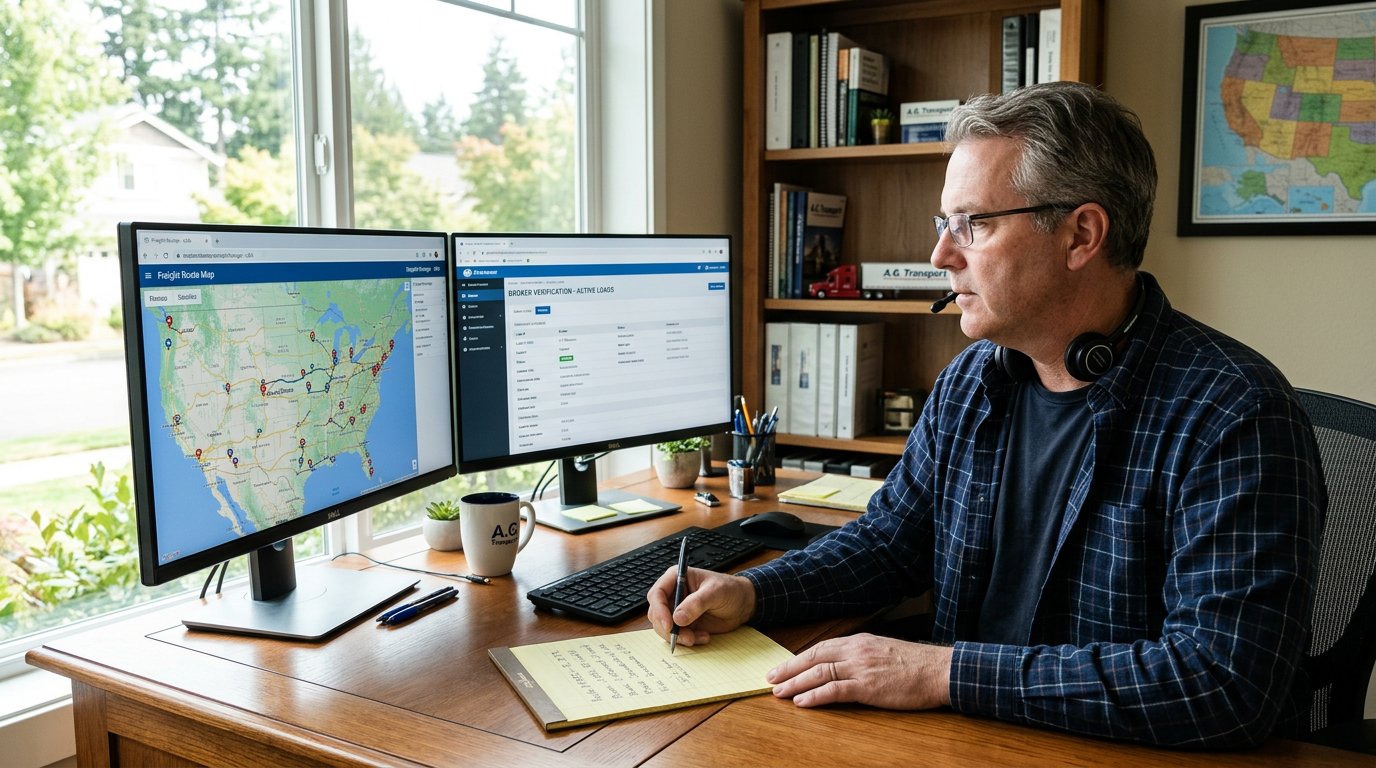
Dispatch desk monitors showing freight rate confirmation, invoice audit, and broker verification
Every missing signature on a Bill of Lading or lumper receipt can hold up broker settlement for weeks.

The three paperwork mistakes that freeze your check

First: blurry dashboard photos with shadows, thumbs in the corner, or cut-off signatures instead of flat document scans. Use a free mobile document scanner app so every Bill of Lading looks crisp and legible.

Second: forgetting written broker approval before paying a warehouse lumper fee, or losing the original printed lumper receipt. Third: factoring some invoices while letting a broker accidentally mail a check to the wrong address without consistent Notice of Assignment alignment.

Connected Knowledge Graph

Keywords & Connected Web Articles for Lesson 3.1

Click any short-tail keyword or long-tail search topic to jump straight into our full companion web article or primary federal reference.

Verified Answers & Compliance Reference

Lesson 3.1 — Frequently Asked Questions

Detailed answers on "getting set up to get paid" for new and active motor carriers.

Standard freight brokerage payment terms are typically Net-30 days (and occasionally 35–45 days) counted from the date the broker receives your complete invoice, rate confirmation, and signed Proof of Delivery—not the pickup date.

Under non-recourse factoring, the factoring company absorbs credit loss only for covered broker insolvency/bankruptcy events defined in the contract, whereas under recourse factoring the carrier buys back unpaid invoices after a set aging period (often 60–90 days) regardless of reason. Always read fee schedules, reserve rules, and contract terms carefully.

Not for every general domestic broker load, though a SCAC code is required for ocean ports, rail intermodal ramps, US/Canada/Mexico border crossings, military/government shipments, and many large automotive or retail shippers. QP processes SCAC registrations for $199 Standard, $99 Factoring/Insurance, or Free under Circle Network (government/NMFTA fees separate).

Most freight brokers require your insurance agent or insurer portal to issue a Certificate of Insurance listing that specific brokerage's name and address as Certificate Holder so they receive direct notice if your policy cancels.

Verify the broker's legal name and MC number, pickup/delivery addresses and appointment windows, exact all-in dollar rate, weight and equipment type, detention rate after 2 hours, TONU (Truck Order Not Used) terms, and any driver assist or tarp requirements.

Yes. Becoming a QP factoring client automatically qualifies you for the 50% discounted tier on QP's published compliance processing-fee schedule plus access to the Nation's Largest Fuel Discount Network, and adding a preferred insurance vendor qualifies you for Circle Network waivers.