
Which operations need USDOT only vs. both USDOT and MC authority?
Imagine a roofing contractor driving a heavy flatbed across state lines carrying shingles solely for its own roofing jobs: because it is transporting its own tools and materials rather than hauling cargo for hire, it operates as a Private Motor Carrier and registers for a USDOT number without needing MC for-hire property authority.
Now imagine an independent box-truck, hotshot, or semi-truck owner booking loads through freight brokers across state lines: because you are paid by shippers/brokers to transport someone else's regulated goods across state borders, you are an Interstate For-Hire Motor Carrier and require both an active USDOT number and active operating authority.
| Operation Profile | USDOT Needed? | For-Hire MC Authority Needed? |
|---|---|---|
| Interstate semi-truck hauling general broker freight | Yes | Yes (plus BOC-3 & BMC-91) |
| Interstate non-CDL 26,000 lb box truck hauling broker freight | Yes | Yes (plus BOC-3 & BMC-91) |
| Interstate farmer / carrier hauling exclusively FMCSA-exempt raw crops | Yes | No (Exempt Commodity Carrier) |
| Construction / retail business hauling strictly its own inventory interstate | Yes | No (Private Property Carrier) |
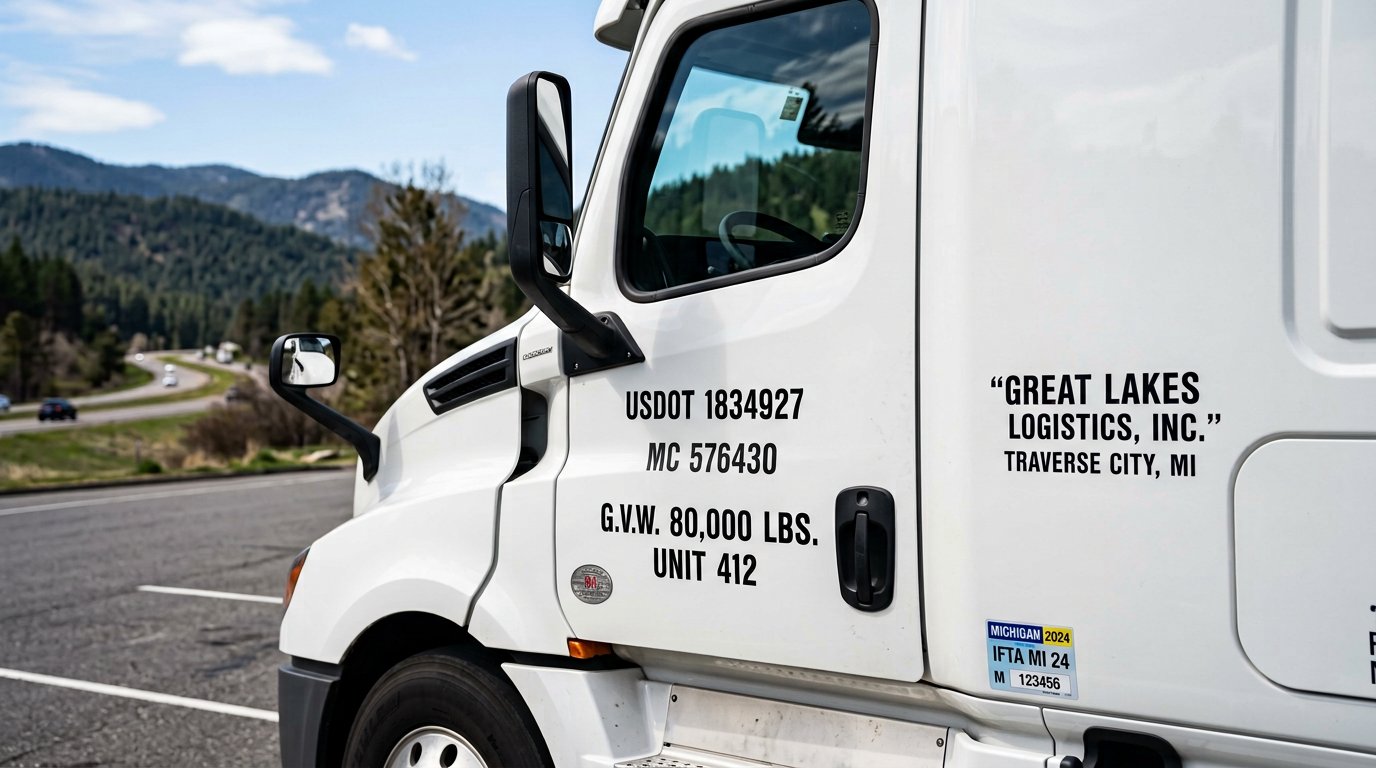
Don't fail a roadside inspection over improper door lettering
Under 49 CFR 390.21, every self-propelled CMV operated in interstate commerce must display on BOTH sides of the power unit: (1) the exact legal name or single listed DBA on your MCS-150, and (2) the letters 'USDOT' followed by your number, in sharp contrasting color legible from 50 feet during daylight while stationary. Note that displaying 'MC-' on the cab door is optional under current federal marking rules, though many carriers display it voluntarily.