Lesson 2.1Getting Ready7 min readUpdated

Getting insurance-ready

Why insurers ask what they ask, what makes a new carrier look risky, and how to walk into a quote prepared instead of panicked.

Brandon Bennett, Lead Instructor at Trucking Authority University

By Brandon Bennett · Lead Instructor

Trucking Authority University · Powered by QP Trucking Solutions · Free Educational Curriculum

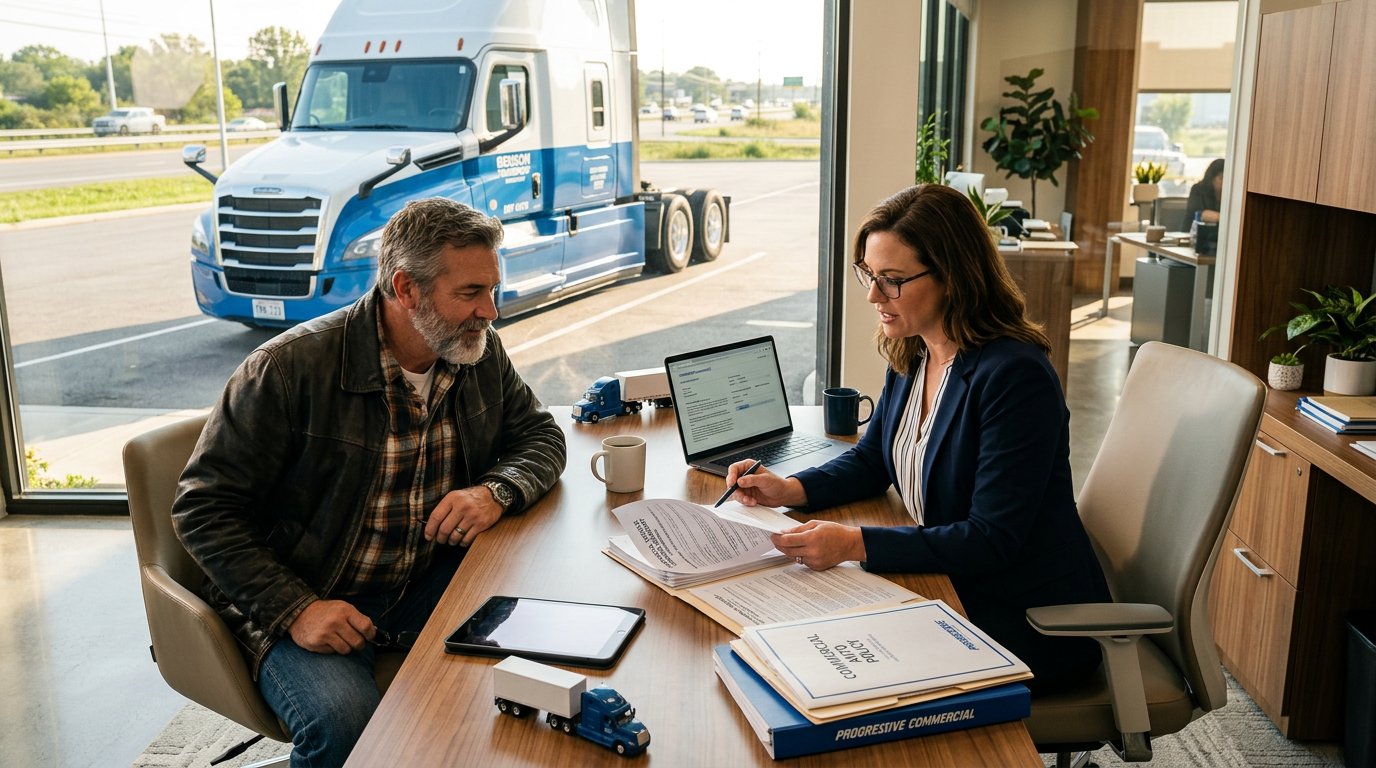
Owner-operator sitting across desk with commercial truck insurance advisor reviewing coverage and BMC-91 requirements
Preparing your VIN, garaging ZIP code, CDL history, and commodity list ahead of time unlocks faster, cleaner insurance quotes.

Visual Framework

How Insurance Connects to Authority Activation

Buying a policy alone isn't enough—your underwriter must transmit electronic proof directly to FMCSA.

Step 01

Pre-Underwriting Quote Packet

Gather CDL copy, 3–5 year MVR, truck VIN & stated value, garaging street address, target lanes, and specific commodities.

Step 02

Match Legal Entity Exactly

Confirm your LLC name, DBA (if any), and physical address match your IRS EIN and FMCSA registration character for character.

Step 03

Bind Coverage at the Right Moment

Bind your policy in sync with your FMCSA application vetting timeline so you aren't paying weeks of idle truck premiums.

Step 04

Insurer E-Files BMC-91 / BMC-34

Only a licensed insurance company (not an agent PDF) can post the electronic BMC-91 primary liability filing on FMCSA's portal.

Why do insurers ask so many detailed questions for a new venture?

To an insurance underwriter, a brand-new USDOT number has zero fleet inspection history yet. Because there is no multi-year SAFER track record to price from, underwriters rely heavily on who is behind the wheel, where the truck sleeps at night, how far from home you run, and what sits inside the trailer.

Saying 'I'll haul whatever pays' is the fastest way to double your quote. Mentioning hazmat, oversized loads, high-theft electronics, or nationwide unlimited radius when you really plan to haul regional dry-van paper and palletized goods forces underwriters to price for the riskiest commodity mentioned.

Core Commercial Truck Insurance Coverages Explained
Coverage TypeWho Requires It?Typical Benchmark & Purpose
Primary Auto Liability (BMC-91 / BMC-91X)FMCSA + Every Broker/Shipper$750k federal minimum for general freight (10,001+ lbs); $1,000,000 industry broker standard
Motor Truck CargoFreight Brokers & Shippers (FMCSA BMC-34 for HHG)$100,000 typical broker requirement ($250k+ for auto haulers/reefer/high-value loads)
Physical Damage (Comprehensive & Collision)Equipment Lender / Lessors (and Smart Asset Protection)Covers repair/replacement of your own tractor and owned trailer based on stated value
Trailer Interchange / Non-Owned TrailerPower-Only & Drop-and-Hook BrokersProtects trailers owned by shippers or brokers while pulled under interchange agreements
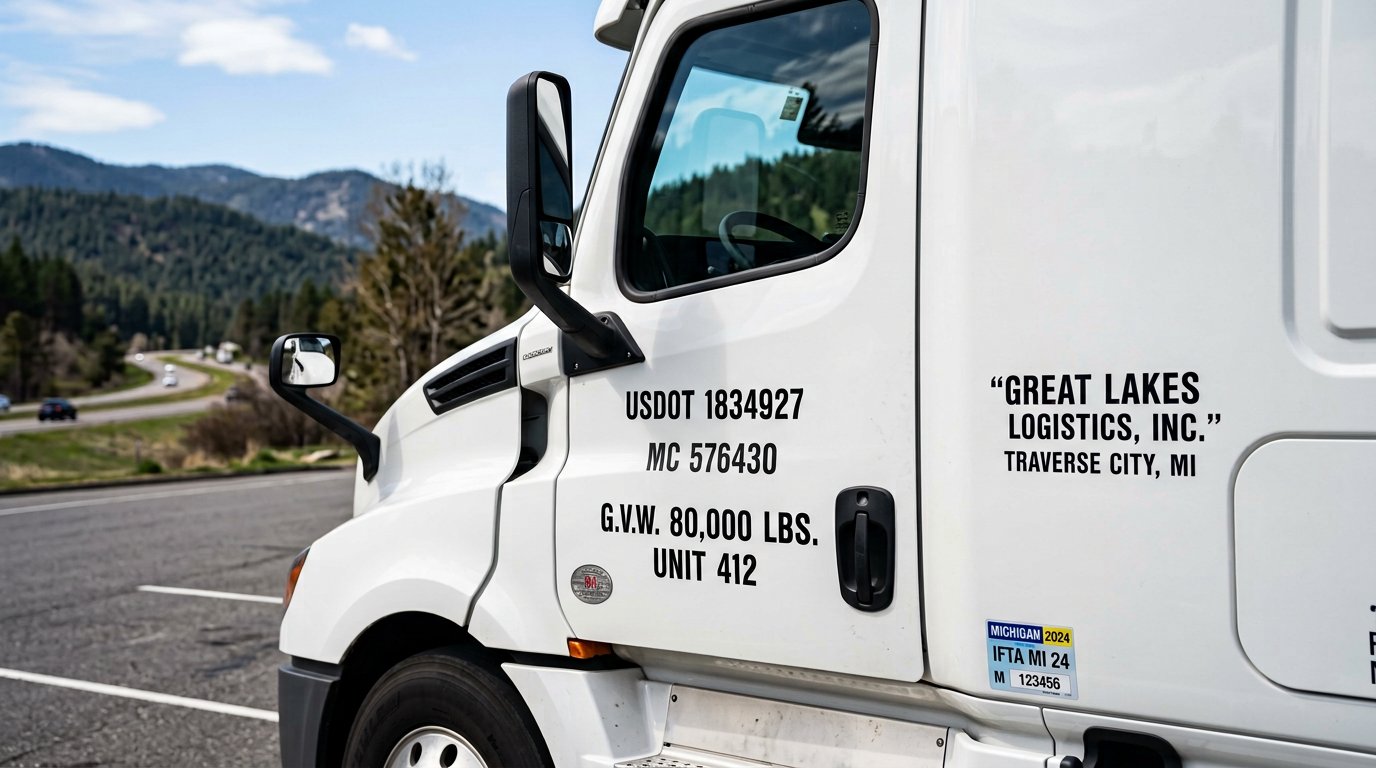
Commercial truck door markings showing USDOT and MC numbers matched to commercial insurance policy
Every character of your business name and address on your insurance filing must match your FMCSA application word-for-word.

How to walk into your quote prepared instead of panicked

Bring a clean, specific operational profile to your quote call: your exact tractor year/make/model/VIN (even a prospective VIN if shopping trucks), whether dashcams and ELDs are installed, exact CDL issue date, target states or regional radius, and honest commodity list.

Also check how your insurance partner coordinates with your back office. Under QP Trucking Solutions' Circle Network, carriers who both factor with QP and use a preferred insurance vendor have most published QP filing processing fees waived—and even using QP insurance alone qualifies you for the 50% discounted processing-fee tier.

Connected Knowledge Graph

Keywords & Connected Web Articles for Lesson 2.1

Click any short-tail keyword or long-tail search topic to jump straight into our full companion web article or primary federal reference.

Verified Answers & Compliance Reference

Lesson 2.1 — Frequently Asked Questions

Detailed answers on "getting insurance-ready" for new and active motor carriers.

For interstate for-hire general non-hazardous freight in vehicles of 10,001 lbs or more GVWR, FMCSA's statutory minimum primary liability is $750,000 ($300,000 for non-hazmat freight strictly in vehicles under 10,001 lbs, and $1,000,000 to $5,000,000 for hazardous materials). However, nearly all freight brokers require $1,000,000 auto liability and $100,000 motor truck cargo.

No. A PDF Certificate of Insurance is for freight brokers and shippers. To activate operating authority with FMCSA, your insurance underwriter's home office must submit an electronic Form BMC-91 or BMC-91X filing directly into FMCSA's Licensing & Insurance system.

Yes—ask your agent to quote using a sample VIN of the exact truck year, make, and model you plan to buy along with your actual CDL, MVR, garaging ZIP, and target freight profile. Once you select the specific unit, update the exact VIN before binding.

Some agents check broad commodity boxes that accidentally include high-theft electronics, pharmaceuticals, hazmat, or oversized machinery. Always specify the exact everyday non-hazardous commodities you plan to haul so underwriters price your true risk.

Your insurer transmits an electronic cancellation notice to FMCSA. If replacement BMC-91 coverage is not posted before the cancellation effective date, FMCSA revokes your operating authority, brokers immediately block dispatch, and reinstatement filings are required.

Using QP insurance alone qualifies you for 50% off published QP processing fees across most filings. Combining a preferred insurance vendor with QP factoring qualifies you for the Circle Network, where most scheduled QP processing fees are waived (government fees remain separate).