
Lesson 1.2Before Applying8 min readUpdated

What it really costs to start

A straight look at startup costs — entity, authority, insurance, plates and the deposits nobody warns you about — so you can budget before you commit.

Brandon Bennett, Lead Instructor at Trucking Authority University

By Brandon Bennett · Lead Instructor

Trucking Authority University · Powered by QP Trucking Solutions · Free Educational Curriculum

Laptop displaying startup budget alongside calculator, commercial truck keys, and compliance folders
Separating one-time startup outlays, recurring compliance fees, and operating reserves keeps new carriers out of cash-flow traps.

Visual Framework

The 4 Buckets of New Authority Startup Costs

Budget every bucket separately so a surprise invoice never parks your truck before Load #1.

Bucket 1

Entity & Federal Registration

State LLC formation fee, free IRS EIN issuance, FMCSA USDOT/MC registration government fee, BOC-3 process agent, and UCR.

Bucket 2

Insurance Down Payment

Commercial primary auto liability ($750k–$1M+), motor truck cargo, physical damage, and down payment required prior to BMC-91 filing.

Bucket 3

Plates, Taxes & Safety Setup

IRS Form 2290 HVUT (55,000+ lbs), state IRP apportioned base plates, IFTA license/decals, ELD device, and DOT drug/alcohol consortium.

Bucket 4

First-30-Days Working Capital

Diesel fuel, tolls, scale tickets, roadside maintenance reserve, and cash bridge until factoring or broker payments clear.

What is the difference between government fees and processing fees?

Every new authority owner needs complete clarity on where money goes. Government fees are statutory charges set and collected by public agencies—such as your Secretary of State for Articles of Organization, FMCSA for operating authority applications, the Unified Carrier Registration (UCR) Plan, the IRS for Form 2290 Heavy Vehicle Use Tax, and your base state DMV/ apportioned registration office for IRP plates and IFTA credentials.

Processing fees are what a private service company charges if you hire them to prepare, organize, submit, and track those filings accurately on your behalf. You can file directly with government portals and pay $0 in private processing fees, or use QP Trucking Solutions with fully published processing fees on our setup page.

Published QP Processing Fees Across Tiers (Government Agency Fees Always Separate)
Filing / ServiceFrequencyStandard QP FeeFactoring or InsuranceCircle Network
LLC SetupOne-time$300$150Free
EIN AssistanceOne-time$300$150Free
New Authority ApplicationOne-time$300$150Confirm with rep*
BOC-3 FilingOne-time$199$99Free
IRP SetupOne-time$499$249Free
IFTA SetupOne-time$499$249Free
Form 2290 AssistanceAnnual$300$150Free
Drug & Alcohol ConsortiumAnnual$399$199Free
UCR RegistrationAnnual$199$99Free
MCS-150 UpdateEvery 2 years$199$99Free
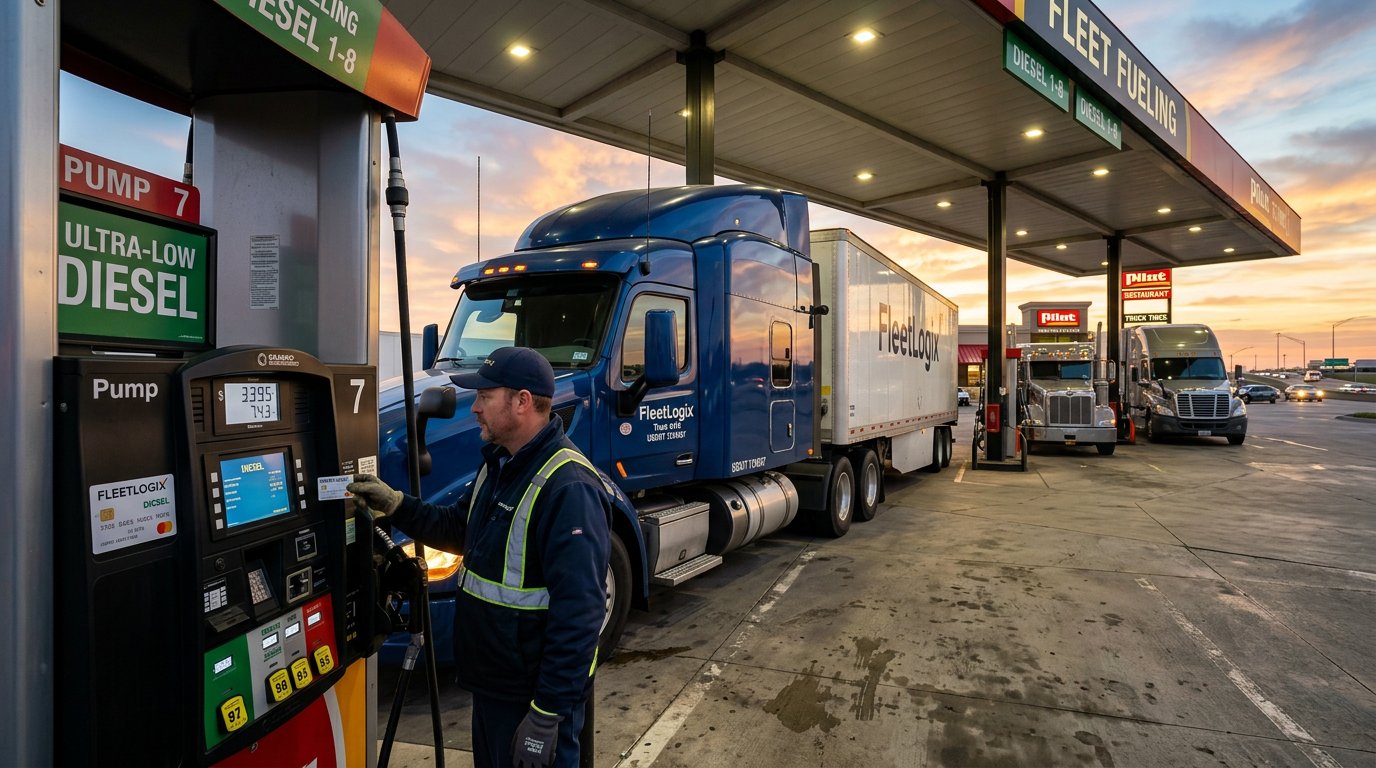
Commercial tractor-trailer refueling at a diesel pump island using a commercial fuel card
Fuel and insurance down payments—not government filing fees—account for the largest cash outlays in month one.

Which startup costs catch new carriers off guard?

The expenses that stall first-time carriers rarely come from the initial USDOT form. Instead, surprises happen in the gap between submitting the authority application and rolling under your first rate confirmation.

Remember that your MC application undergoes FMCSA's mandatory vetting period while insurance and BOC-3 filings go in. If you finance a truck and activate insurance too early without IRP plates, ELD hardware, or Drug & Alcohol Clearinghouse enrollment ready, you can end up making a truck payment and an insurance payment before hauling a single paid mile.

  • Sequence filings deliberately: form your LLC and obtain your EIN first so every federal filing, bank account, and insurance quote matches the exact legal company name.
  • File IRS Form 2290 promptly upon putting a heavy truck (55,000+ lbs) on the road so you have the stamped Schedule 1 needed to issue IRP apportioned plates.
  • Plan fuel cash flow from day one: diesel is your largest weekly variable expense before broker invoices pay out—pairing freight factoring with a fuel discount network reduces strain on your cash reserve.
  • Keep an emergency repair reserve separate from tax and registration money so one blown tire or sensor doesn't derail your first month.

Connected Knowledge Graph

Keywords & Connected Web Articles for Lesson 1.2

Click any short-tail keyword or long-tail search topic to jump straight into our full companion web article or primary federal reference.

Verified Answers & Compliance Reference

Lesson 1.2 — Frequently Asked Questions

Detailed answers on "what it really costs to start" for new and active motor carriers.

No. Government fees set by FMCSA, the IRS, UCR, and state agencies are always separate from QP processing fees and go directly to those agencies. Even when QP processing fees are discounted or waived under Circle Network, statutory government fees still apply.

No. Your equipment weight, cargo type, and whether you cross state lines determine what you actually need. For example, vehicles under 26,001 pounds have different IFTA/IRP rules than Class 8 tractors, and SCAC codes are mainly needed for drayage, intermodal, border crossings, or specific shippers.

No. The IRS issues Employer Identification Numbers online for free when you apply directly at IRS.gov. If you prefer hands-on filing preparation, QP offers EIN Assistance for a published processing fee—or free processing for eligible Circle Network members.

IRS Form 2290 applies to highway motor vehicles with a taxable gross weight of 55,000 pounds or more operating on public highways. For newly acquired trucks, Form 2290 is due by the last day of the month following the month the vehicle is first used on public highways.

No. Circle Network waives most published QP paperwork processing fees for carriers who both factor with QP and insure through a preferred vendor, and gives factoring/insurance clients access to the Nation's Largest Fuel Discount Network—but insurance premiums, vehicle payments, fuel, and government fees remain your business costs.

Complete your LLC, EIN, vehicle readiness, and pre-underwriting insurance quotes first, coordinate your policy binding date with your FMCSA filing timeline, and submit your BOC-3 process agent filing promptly so nothing stalls activation.